
MLB - 12
The MLB MVP Race Is a Popularity Contest. The 2026 NL Race Is the Proof.
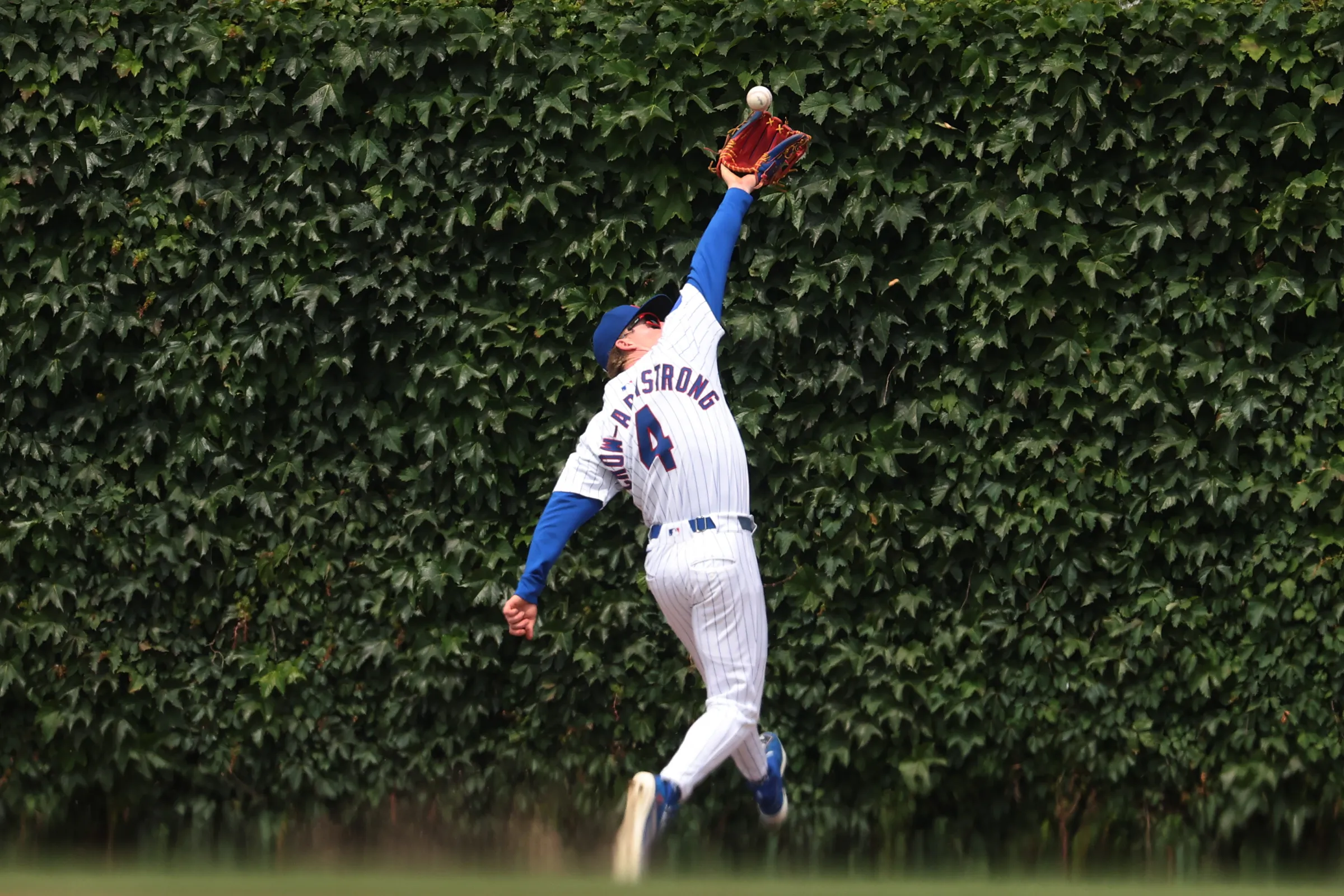
There is a stat sitting at the top of the National League leaderboard right now, and it does not have Shohei Ohtani's name next to it. It has Pete Crow-Armstrong's.
By Zack Lerdall - Jul 30, 2026
The MLB MVP Race Is a Popularity Contest. The 2026 NL Race Is the Proof.
There is a stat sitting at the top of the National League leaderboard right now, and it does not have Shohei Ohtani's name next to it. It has Pete Crow-Armstrong's.
You would never know that from the betting market. Ohtani has been the odds-on favorite to win the award since before the season started, and he still is: as of July 28, ESPN's tracker had him at -220 with Crow-Armstrong at +190, and several books still price Ohtani far heavier. Sit with that for a second. The man who trails on the leaderboard is the favorite; the man who leads it is the underdog. Not because of anything either did in 2026 — because of who Ohtani already was before it started.
The problem is that the actual baseball doesn't agree.
What the leaderboard says
Wins Above Replacement, or WAR, tries to answer the MVP's exact question in a single number: how many extra wins does this player give his team compared to a readily available replacement — a bench player or a call-up from the minors? It isn't a perfect stat, and nobody claims it is. But it's the number voters have leaned on more and more for a decade, and it's the foundation the whole "Ohtani is the most valuable player alive" case is built on.
So let's use it. As of late July, Crow-Armstrong leads all of Major League Baseball at 6.5 WAR by Baseball-Reference and 7.0 by FanGraphs. Ohtani sits second, at 5.6 and 5.8 — and, crucially, those Ohtani totals already fold in his pitching. Crow-Armstrong isn't nudging ahead; he's the clear number one, ahead of the next-best position player by more than a full win. And he's doing it the complete way: a Fielding Run Value that tops all of baseball, elite baserunning, and a bat that has finally caught up to the glove, with a walk rate that has more than doubled from a year ago.
By the metric that is supposed to decide this thing, the race isn't a runaway. If anything, the wrong guy is running away with it.
Watch how slowly the "objective" market moves
Here is the tell that this was never really about the numbers.
For most of the season, Ohtani did lead in WAR, and the market treated the award as finished — he sat between -1000 and -1500 for months, the kind of price you put on a formality, not a race. Then the production turned. Crow-Armstrong kept climbing, Ohtani leveled off, PCA passed him, and by late July he led the entire sport in WAR.
Now watch how grudgingly the "objective" market admitted it. It took a win-and-a-half WAR lead — a chasm, in MVP terms — just to drag Ohtani from -1500 down toward -220, and to pull Crow-Armstrong from a +700 afterthought to a +190 live threat. He didn't have to be a little better. He had to be overwhelmingly better just to make it a race at all. That's the popularity contest in one sentence: fame is the default setting, and merit has to file an appeal.
Because if this were settled on the field, the order would simply flip. The player leading the sport's summary stat would be the favorite, full stop, and the guy he passed would be the one chasing. Instead the leaderboard says one name and the betting board — our best live proxy for how the voters are leaning — still says the other. When those two point in different directions, one of them is measuring baseball and the other is measuring who we'd already decided the story should be about.
And it isn't hard to tell which is which. Ohtani has won the last two NL MVPs and four overall. He is the most famous, most marketable, most narratively convenient player in the sport — the two-way unicorn who lets a voter feel like they're witnessing history rather than filling out a ballot. When a player becomes that, the ballot stops being a measurement and starts drifting toward a coronation. The stats become set dressing for a story we've half-decided to tell.
"But the two-way value" — about that
The strongest honest case for Ohtani is that WAR can't fully capture the rarity of a guy who hits like an MVP and pitches like an ace. Fair. That's a real argument, and I'll grant it more weight than most PCA supporters will.
Except the pitching half of that argument is currently on the shelf. A left knee issue has forced Ohtani to pause pitching for an undetermined stretch. His mound work — a 1.79 ERA over 14 starts — was the thing that separated him, the tiebreaker that let voters wave off any position player who was out-hitting or out-defending him. Take the innings away and you're comparing two bats and two gloves. In that comparison, it isn't close: Crow-Armstrong is the better fielder by a mile, the better baserunner, and no longer a distant second at the plate.
So the case for Ohtani rests on a skill he isn't currently using — and a market that keeps him the favorite anyway.
The V stands for Valuable
Here's the distinction that vanishes every October: "best player" and "most valuable player" are not the same words. Value is a marginal idea — it asks what happens to a team when you pull one player out of it. How far does the floor drop?
Run that test on the Dodgers. They own the best record in baseball at 66-38 and they've been to the World Series in each of the last two years. Now subtract Ohtani. You still have Mookie Betts, Freddie Freeman, and the deepest, most expensive roster in the sport. They don't fall out of the race — they stay a playoff lock, probably still a favorite. Ohtani makes a great team greater. He doesn't make them a team. And a player whose removal is survivable is, almost by definition, less valuable than one whose removal is not.
Now run the same test on a contender built around someone irreplaceable. Take Matt Olson off the Braves, or Jacob Misiorowski off the Brewers, and those clubs don't shave a couple of wins off a comfortable cushion — you've pulled a load-bearing beam out of the house. Whatever you make of either man as an MVP candidate, their teams would feel the absence in a way the Dodgers would simply never feel Ohtani's. That asymmetry is the whole point.
Which brings it back to Crow-Armstrong. He isn't padding a juggernaut's margin — he's dragging a wild-card Cubs team toward October with the best all-around season in the league. Pull him and Chicago's floor caves in. Pull Ohtani and Los Angeles barely blinks. If the word stamped on the trophy means anything, that gap is supposed to count for something.
This isn't an anti-Ohtani column
I want to be careful here, because the lazy version of this argument is "Ohtani is overrated," and that's not true. He is one of the best players who has ever lived and he might retake the WAR lead the moment he's back on the mound. WAR itself is contestable — the defensive metrics fueling PCA's edge are noisier than the offensive ones, and "most valuable" was always going to carry some subjectivity no formula can resolve. And the marginal-value argument cuts the other way for plenty of voters, who'd say penalizing a great player for having great teammates is exactly backwards — that "valuable" should just mean "best." That's fair. My only answer is that when the best-player question is this close, the tiebreaker ought to be the one the word actually asks: who their team can't replace.
But that's exactly the point. If the race were genuinely close and voters split hairs over how to weigh two-way novelty against a historic defensive season, that would be a healthy debate. Instead it took the WAR leader a win-and-a-half cushion just to make the market treat this as a race at all — and the man he passed on the field is still, somehow, the favorite off it. That gap between what the numbers say and what reputation says isn't analysis. It's habit.
The award we say we give vs. the one we actually give
We tell ourselves the MVP goes to the most valuable player. What the 2026 NL race shows is that it increasingly goes to the most valuable name — the player with the trophies, the highlight reel, the storyline that writes itself. Ohtani earns his fame honestly. That's not the issue. The issue is that fame has stopped being a byproduct of the vote and started being the input.
Pete Crow-Armstrong is, right now, having the most valuable season in the National League. The leaderboard has known it for weeks. The market is only now, grudgingly, catching up — and the fact that it took this much to move it is the whole argument. When merit has to overwhelm fame just to pull close, the award isn't measuring value anymore. It's measuring fame, and charging everyone else a tax to compete with it.
Author
Zack Lerdall
Engagement
Comments: 0
Loading engagement...